Chapter 02 — Inland haul
It remembers the road
Every shock, every degree, every door event — timestamped and located, whether or not anyone is watching.
Chapter 01 — Origin · Machala, EC
Senses, a memory, and a voice — one trustworthy record from the packing house to the final door.
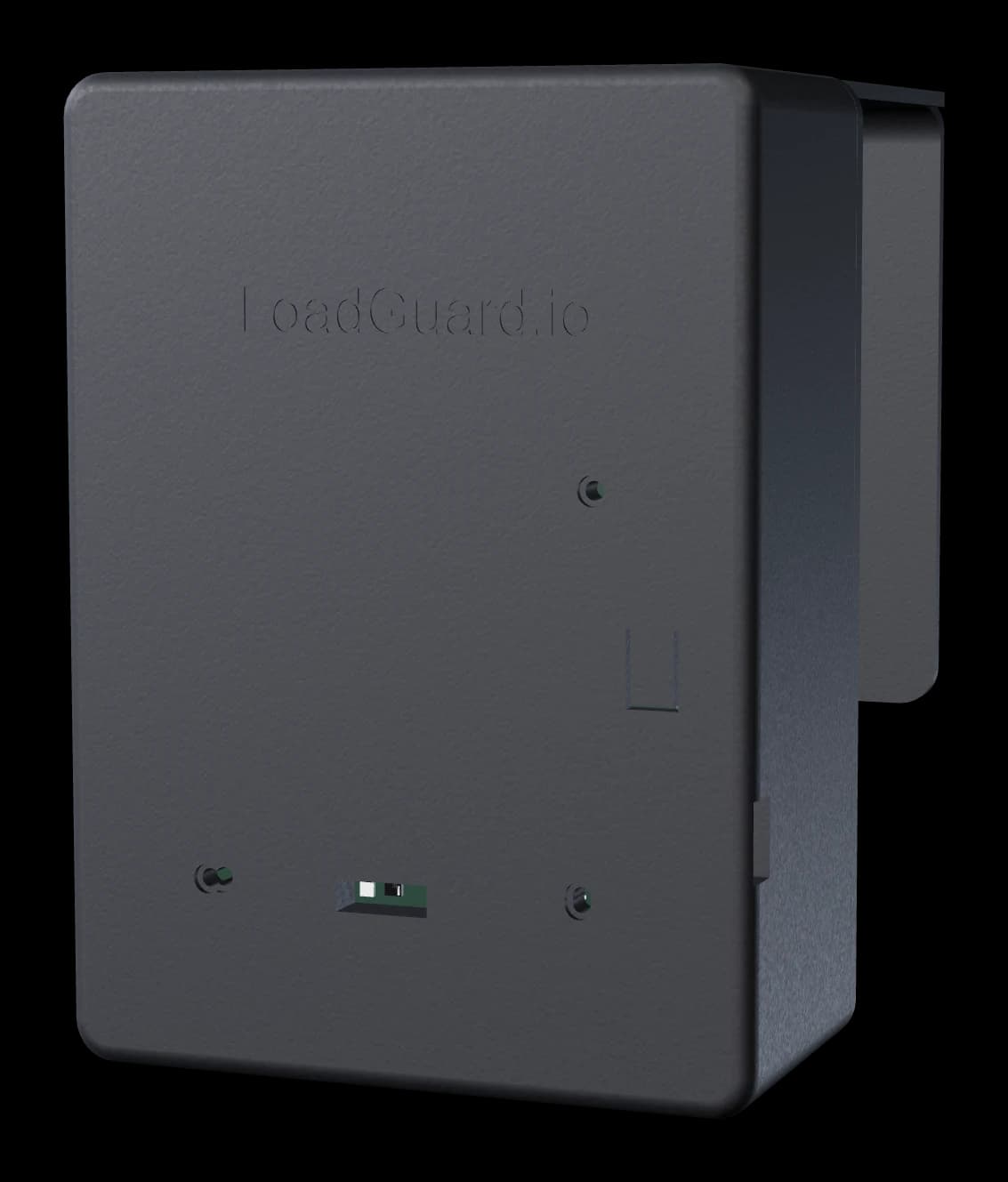
INSTALL · MSKU 704 3318
Chapter 02 — Inland haul
Every shock, every degree, every door event — timestamped and located, whether or not anyone is watching.
Chapter 03 — Port of Guayaquil
Cryptographic identity, a photographed install, an ISO 6346 match. The chain of custody starts before the ship does.
Chapter 04 — North Atlantic · Day 11
Four hours at 16.1 °C, a thousand miles from anyone, with no signal to report it. The device keeps recording anyway.
Chapter 05 — Final door · Rotterdam
The doors open on an answer, not an argument.
25 Ah
Battery — full voyage, no external power
~5 m
GNSS accuracy, four fallback location layers
9-axis
IMU with on-board event classification
0
Gaps in the record — records offline, syncs later
Managing one shipment takes producers, packers, exporters, forwarders, carriers, inspectors, importers, and buyers — and the record of what happened is split across their emails, documents, spreadsheets, devices, and tracking systems. Finding it, connecting it, and verifying it is the hard part, especially after something goes wrong.
01
Collect
Emails, documents, devices, tracking
02
Connect
Filed to shipment, container, voyage
03
Monitor
Against the cargo's own requirements
04
Investigate
Detected → notified → acknowledged → resolved
05
Report
One evidence-backed account
06
Claim
Facts, packaged for the insurer
01
Forward carrier updates, booking confirmations, delay notices, and inspection correspondence to your shipment address. LoadGuard extracts the shipment, container, vessel, and voyage, and files the message to its evidence record — out of individual inboxes, onto the shipment.
02
Bills of lading, packing lists, invoices, certificates, inspection and survey reports — analyzed for what each contributes to the record: the cargo, the parties, the required conditions, the agreements. Every extracted fact stays linked to its source document.
03
Readings are judged against the cargo's own documented requirements — not generic thresholds. An excursion relative to the certificate, a route deviation, a missing inspection, a discrepancy between a document and observed activity: flagged as it happens.
04
Every issue carries its own audit trail: when it was detected, what evidence triggered it, who was notified, whether it was acknowledged, what was done, how it closed. In a claim, when the issue became known matters as much as the issue itself.
> Did MSKU 704 3318 stay in range the whole way?
Yes — except one 4-hour excursion to 16.1 °C on day 11, 320 nm east of Bermuda. Doors stayed sealed, no shock events in that window. Sources: device telemetry, reefer log, install record.
What cargo is on the water? Which shipments need attention? What documents are missing? What happened after the alert? The assistant retrieves and explains the evidence already in the record — it is a reader of the sources, never a substitute for them.
Field evidence goes in the same way: operators and third parties submit photos, inspection findings, and corrective actions from the warehouse, the port, or the packing house — attached to the shipment, not lost in a chat thread.
The unit clips onto a standard container — no retrofit. It carries the planned route and geofences on board, so a deviation is detected locally, at sea, with no backend in the loop: sampling steps up, pre- and post-event data is preserved, and the alert transmits the moment coverage returns.
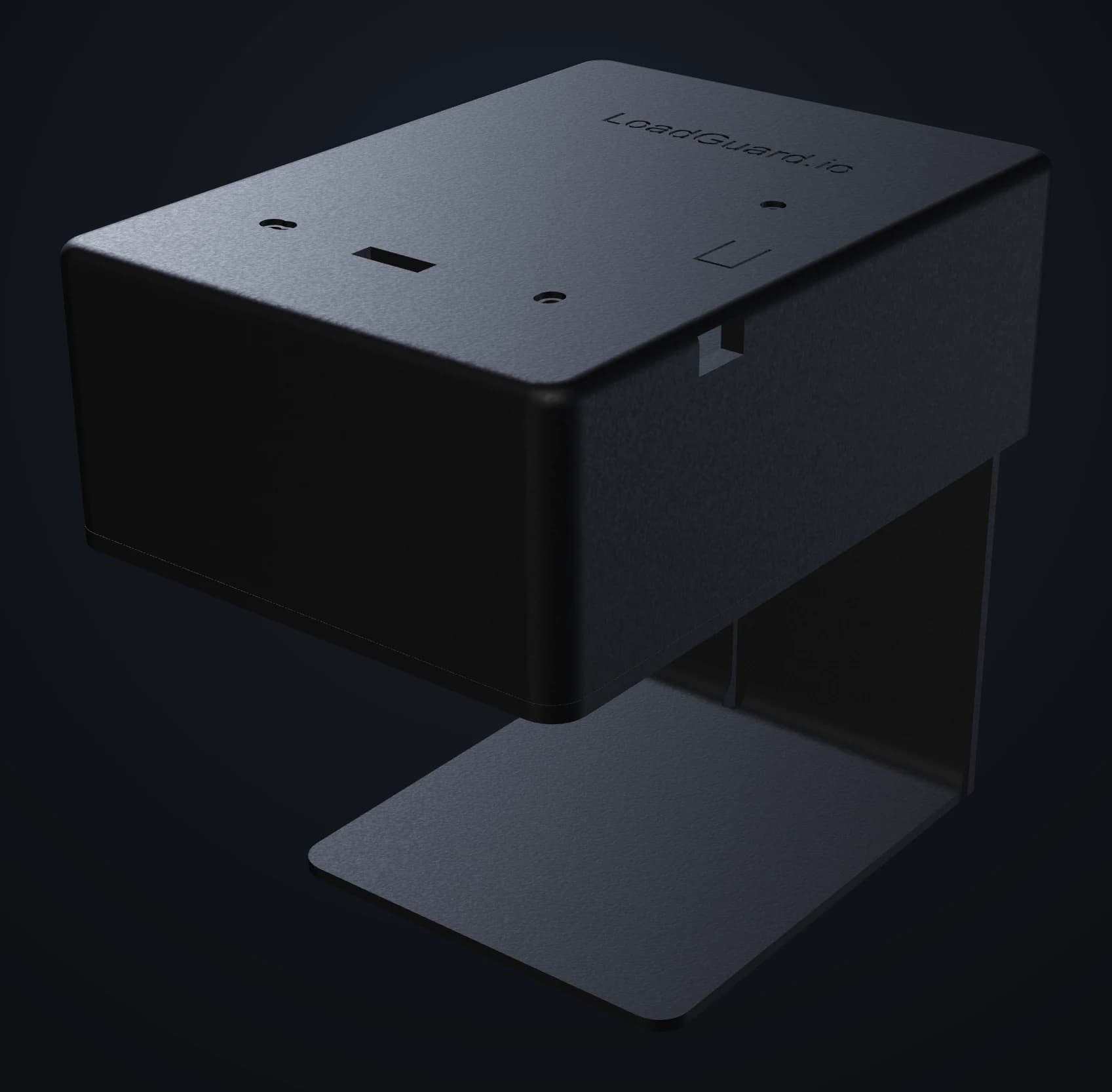
Edge route monitoring
Planned route, waypoints, and geofences held on-device; deviations detected locally, offline
Multi-source location
GNSS (~5 m outdoors) with cellular, Wi-Fi, and BLE-beacon fallback; optional indoor zone detection
Motion & handling
9-axis IMU with on-board ML: shocks, drops, vibration, orientation, loading, door interaction
Adaptive collection
Energy-efficient by default; switches to high-resolution recording around detected anomalies
Environment
Temperature, humidity, VOC index, ambient light — sampled continuously against reefer setpoints
Power & memory
25 Ah battery; tamper-evident local store-and-forward through every connectivity gap
Reconstructing an incident turns on distinctions most systems throw away. LoadGuard keeps all five timestamps for every event — so the record can establish what information was available to each party, at each moment.
T1
Occurred
The event itself, on the water
T2
Recorded
Written to the device's local store
T3
Transmitted
Sent when coverage returned
T4
Received
Ingested and verified by the platform
T5
Known
An operator was notified and acknowledged
The shipment evidence report brings together what was shipped, what conditions were required, what happened and when, who was notified, what was done — and what is missing, contradictory, or uncertain. Shared with insurers, carriers, and surveyors as one consistent record. LoadGuard doesn't determine liability; it makes the facts easy to access, verify, and communicate.
Exporters
Prove you shipped it right
Demonstrate the cargo left in condition and stayed that way on your leg — before the argument starts.
Importers
Know before the doors open
See a problem while the box is still on the water, not when the pallets are on your dock.
Carriers
Close out disputes faster
An independent record shortens the argument — and often shows the damage happened on someone else's leg.
Insurers
Adjudicate on facts
Assess against a verifiable timeline rather than four conflicting accounts of the same voyage.
“LoadGuard caught suspicious activity on a container before it even arrived. For the first time we could show a buyer exactly what happened, instead of asking them to take our word for it.”
No. The device operates autonomously, stores readings locally, detects events on board, and auto-syncs when it next has coverage. The deep-sea leg is exactly where most monitoring goes quiet — that's the part LoadGuard is built for.
It clips onto a standard container with no retrofit or modification. The unit photographs its own install, matches the ISO 6346 marking, and opens a custody record from that moment.
That's the design goal. Cryptographic device identity, tamper-evident storage, source-traceable documents, and a photographed chain of custody turn telemetry into something defensible in a claim or arbitration.
Cargo and required conditions, full telemetry, timestamped events, install records with photos, source-traceable documents, operational responses, and a correlated timeline — including what's missing or uncertain.
With a pilot on a live lane — typically one origin, one commodity, and enough containers to cover a full sailing.
A pilot starts with one lane — one origin, one commodity, enough containers to cover a full sailing.